During conversations with my students, I’ve noticed that the way residential buildings are described in Korea differs somewhat from English-speaking countries. This guide to Korean housing types explained can be useful, especially if you ever have the chance to live in Korea.
One of the biggest points of confusion is the word “Villa.” What does Villa mean in Korea? It’s probably not what you think. Let’s dive in and explore the most common housing options!
아파트 (Apartment): The High-Rise Standard
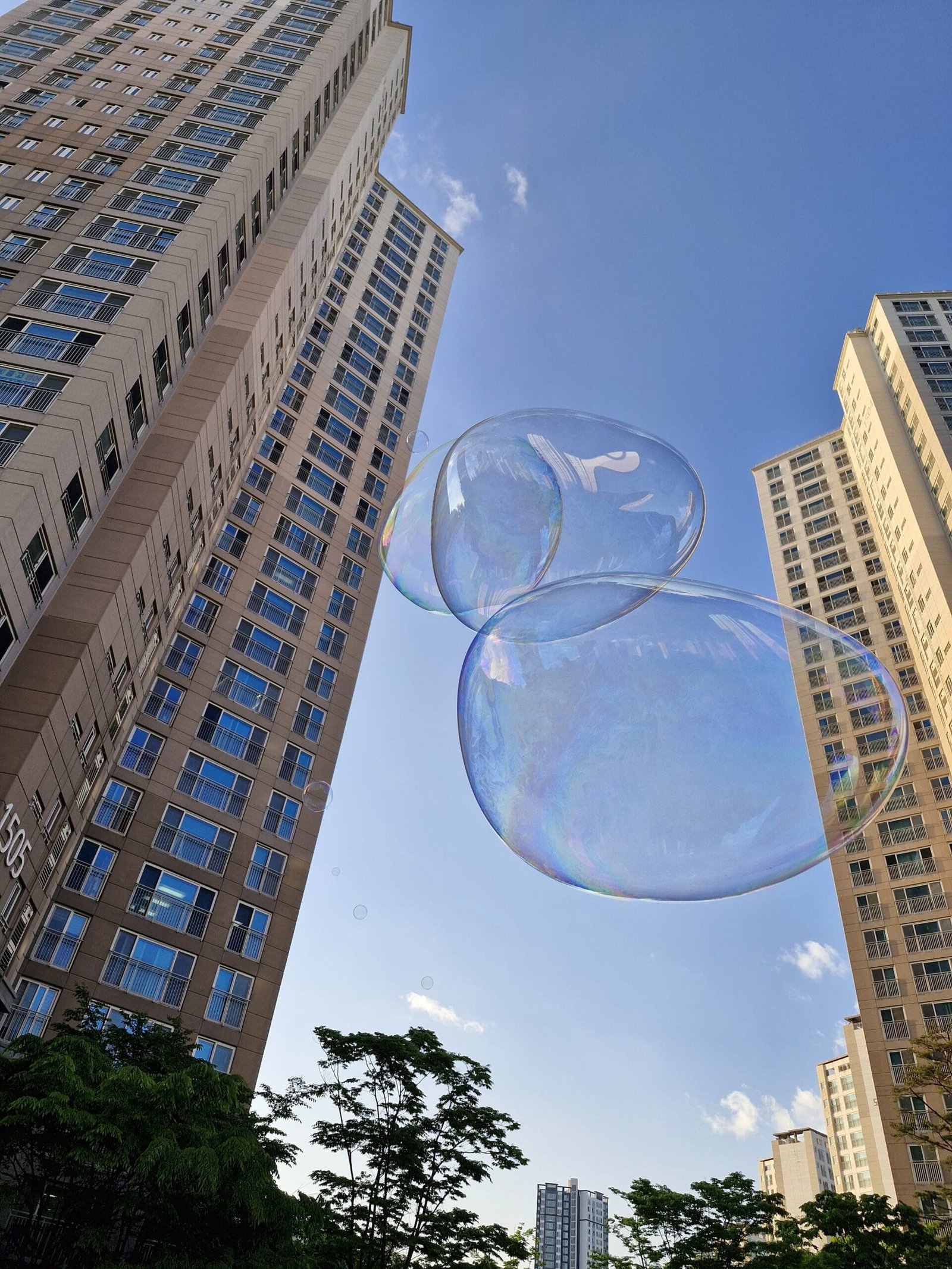
In Korea, the most common form of housing is the ‘아파트’ (Apart). These are high-rise buildings designed for densely populated areas. Given the limited land space and the fact that half of the population lives in the Seoul metropolitan area, these high-rise apartment complexes (danji) have developed extensively.
Rather than just one building, apartments in Korea are often grouped into large complexes of several buildings (or even dozens). These complexes form a mini-community with its own security guards, management office (gwallisil), playgrounds, gyms, and sometimes even parks.
This convenience, security, and the amenities are why ‘Apartments’ are the most desirable (and expensive) housing type for most Korean families. Each building is numbered (e.g., 101동, dong), and each unit is designated by a specific number (e.g., 101호, ho).
빌라 (Villa): What “Villa” Means in Korea
This is the most confusing term for foreigners. While ‘villa’ in English often refers to a luxury vacation home, in Korea, a ‘빌라’ (Villa) is a modest, low-rise residential building, usually 4-5 stories high, with fewer than 10 units.
Apartment vs Villa in Korea
When Koreans talk about an Apartment vs Villa in Korea, they are talking about a significant difference in price and amenities.
- Villas are much more affordable than apartments.
- Why? Villas typically lack the amenities of apartments. There is no security guard, no central management office, no community gym, and often very limited parking (sometimes one spot per unit is impossible).
- Because they are built by smaller construction companies, they don’t have the “brand name” (like Raemian or Xi) that apartments do, which greatly affects resale value.
While there are some luxury villas for the wealthy, the common use of the word ‘Villa’ refers to these more affordable, low-rise buildings.
오피스텔 (Officetel): The Office-Hotel Hybrid
An ‘오피스텔’ (Officetel) is a blend of ‘office’ and ‘hotel,’ describing a space that combines work and living areas. It’s similar to a ‘studio apartment’ or ‘serviced apartment’ in English, but an Officetel in Korea can be used for both commercial (business) and residential purposes.
They are often located in prime commercial districts (right above subway stations) and are popular with single professionals or newlyweds.
- Pros: They are usually new, very secure (often with a 24/7 guard on the first floor), and come “full-option” (with a built-in washing machine, fridge, and air conditioner).
- Cons: They have very high management fees (gwanlibi), and the “actual” living space (jeonyong myeonjeok) is often much smaller than it appears because the listed size includes public areas like hallways.
원룸 (One-room): The Student Studio
This term refers to small studio apartments, most often found in ‘빌라’ (Villa) or ‘오피스텔’ (Officetel) buildings. A ‘one-room’ (wonrum) combines the bedroom, kitchen, and living room into one single space.
These are the most popular and affordable option for students and young professionals, especially in urban areas where efficient use of space is key. This is the most common type of housing rented via wolse (monthly rent). If the unit has an additional small room, it’s called a ‘투룸’ (two-room).
주택 (House): The Detached Home
In Korea, a ‘주택’ (jutaek) refers to a detached home where one household lives independently, similar to the English concept of a ‘house.’ When referring specifically to a single-family home, the term ‘단독주택’ (dandok jutaek) is used.
These houses are more common in suburban or rural areas and tend to have fewer amenities (like security or easy package delivery) compared to apartments, making them less common in densely populated cities. People often have mixed feelings about houses due to their differences in infrastructure and maintenance.
펜션 (Pension): The Vacation Getaway
In Korea, a ‘펜션’ (Pension) is a vacation rental, usually located in scenic, natural settings such as by the sea or in the mountains. It’s a private, cozy space for weekend getaways.
The English word ‘pension’ originates from French, meaning a long-term, budget accommodation (like a guesthouse). However, a Pension in Korea is a scenic retreat and is very popular with families, couples, or groups of friends. They often feature private BBQ areas or even small pools. If you visit Korea, consider staying at a ‘펜션’ instead of a hotel for a different experience!
Why Understanding Korean Housing Types Matters
➤ Korea’s housing types have evolved rapidly with urbanization, leading to unique building names and housing styles. This Korean housing types explained guide shows that even when similar housing concepts exist in English-speaking countries, the terminology and meaning can differ dramatically.
Understanding that an ‘Apartment’ is a full-service complex while a ‘Villa’ is a small, low-amenity building (the opposite of the Western meaning!) will give you a much deeper insight into Korean housing culture.