Hello! I’m Danny, a professional Korean teacher at Podo Korean. When you eat Korean food and try to describe it to a friend, do you find yourself just repeating ‘맛있어요 (It’s delicious)’? Of course, ‘맛있다 (delicious)’ is a great expression, but Koreans consider ‘식감 (sikgam),’ the texture felt in the mouth, to be just as important as the taste. How you describe these Korean food textures can make your conversations much richer and more vivid.
A while ago, our post about ‘두쫀쿠 (Do-Jjon-Coo),’ a trend in Korea, got a fantastic response. (If you haven’t read it yet, click here!) As mentioned in that post, the ‘쫀 (Jjon)’ in ‘두쫀쿠 (Do-Jjon-Coo)’ comes from the word describing the texture ‘쫀득하다 (jjon-deuk-ha-da).’ What’s interesting is that Koreans love to emphasize a feeling by repeating the same word twice, like ‘쫀득쫀득하다 (jjon-deuk-jjon-deuk-ha-da).’ Today, I want to invite you into the fun world of Korean texture expressions that make food even more delicious. Shall we begin?
Fun-to-Chew Korean Food Textures: Chewy, Crispy, and Fresh
The joy of eating comes not only from the taste but also from the act of chewing itself. In Korean, there are many colorful onomatopoeic and mimetic words to express this ‘fun of chewing.’ Let’s start with the three most representative ones.
1. 쫀득쫀득 (Jjon-deuk-jjon-deuk): Chewy & Sticky
This is ‘쫀득쫀득 (jjon-deuk-jjon-deuk),’ the core of the ‘두쫀쿠 (Do-Jjon-Coo)’ we mentioned earlier. This expression is used to describe a texture that is elastic and slightly sticks to your teeth when you chew. It’s most similar to the English ‘chewy,’ but with an added nuance of stickiness and glutinousness. It’s one of the textures that Koreans absolutely love.
- Best for: 떡 (tteok – rice cake), 인절미 (injeolmi – rice cake coated with bean powder), 찹쌀도넛 (chapssal donuts – glutinous rice donuts)
- Example 1: 이 떡은 정말 쫀득쫀득해요. (This tteok is so chewy and sticky.)
- Example 2: 저는 쫀득쫀득한 식감을 좋아해요. (I like the chewy texture.)
2. 바삭바삭 (Ba-sak-ba-sak): Crispy & Crunchy
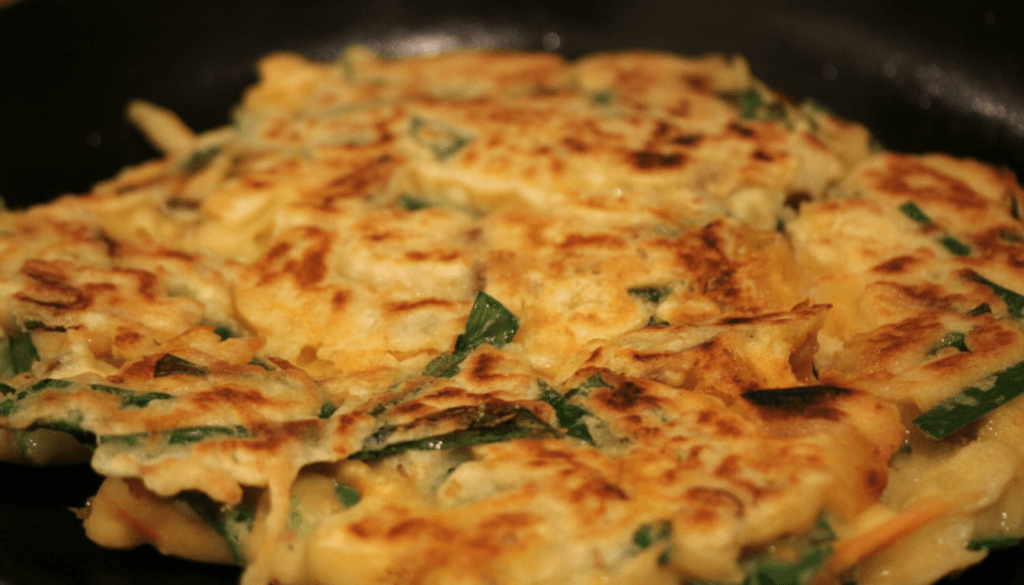
‘바삭바삭 (Ba-sak-ba-sak)’ primarily describes the sound and feel of biting into food that has very little moisture, usually because it has been fried or baked. It’s characterized by a light, pleasant sound. If you use this expression when eating Korean fried chicken, every Korean will nod in agreement!
- Best for: 프라이드치킨 껍질 (fried chicken skin), 감자칩 (potato chips), 튀김 (twigim – fried dishes)
- Example 1: 비 오는 날에는 바삭바삭한 파전을 먹어야 해요. (On a rainy day, you have to eat a crispy pajeon.) Tip: Koreans love to eat pajeon or samgyeopsal on rainy days. 🙂
- Example 2: 이 과자는 정말 바삭바삭해요. (This snack is so crispy.)
3. 아삭아삭 (A-sak-a-sak): Crisp & Fresh
It might sound similar to ‘바삭바삭 (ba-sak-ba-sak),’ but ‘아삭아삭 (a-sak-a-sak)’ has a completely different feel. ‘아삭아삭 (A-sak-a-sak)’ describes the sound and texture of chewing on fresh, juicy vegetables or fruits like apples and cucumbers. While ‘바삭바삭 (ba-sak-ba-sak)’ is a crispness that comes from dryness, ‘아삭아삭 (a-sak-a-sak)’ is a crispness that comes from freshness and moisture.
- Best for: 사과 (apple), 배 (pear), 오이 (cucumber), 양상추 (lettuce), 김치 (kimchi – especially freshly made kimchi)
- Example 1: 신선한 사과를 먹으니 아삭아삭 소리가 났어요. (When I bit into a fresh apple, it made a crisp sound.)
- Example 2: 저는 샐러드에 들어간 아삭아삭한 오이가 정말 좋아요. (I really love the crisp cucumbers in my salad.)
The World of Softness: Mal-lang-mal-lang, Mul-keong-mul-keong, and Moist
Next, let’s look at expressions for soft textures. In Korean, even for the same ‘softness,’ completely different words are used depending on whether the feeling is positive, negative, or related to its state. Understanding these subtle differences is key.
1. 말랑말랑 (Mal-lang-mal-lang): Soft & Squishy
‘말랑말랑 (Mal-lang-mal-lang)’ describes a pleasantly soft and elastic state. Imagine pressing something with your finger, and it gently gives way before returning to its original shape. It’s mainly used for ripe fruits, bread, jellies, and marshmallows and carries a very positive nuance.
- Best for: 잘 익은 복숭아 (ripe peach), 마시멜로 (marshmallow), 부드러운 빵 (soft bread)
- Example 1: 갓 구운 빵이 정말 말랑말랑해요. (The freshly baked bread is so soft and squishy.)
- Example 2: 이 복숭아는 말랑말랑해서 아이들이 먹기 좋아요. (This peach is soft and squishy, so it’s good for kids to eat.)
2. 물컹물컹 (Mul-keong-mul-keong): Mushy & Soggy
On the other hand, ‘물컹물컹 (mul-keong-mul-keong),’ unlike ‘말랑말랑 (mal-lang-mal-lang),’ is mostly used with a negative connotation. It describes a state where something is overripe or spoiled, easily losing its shape and having no firmness. If ‘말랑말랑 (mal-lang-mal-lang)’ is a pleasant softness, ‘물컹물컹 (mul-keong-mul-keong)’ is closer to an unpleasant mushiness. Using this word can imply that the food is not fresh.
- Best for: 너무 익은 과일 (overripe fruit), 오래된 두부 (old tofu), 일부 해산물 (certain seafood like sea cucumbers)
- Example 1: 복숭아를 너무 오래 둬서 물컹물컹해졌어요. (I left the peach out for too long, and it became mushy.)
- Example 2: 저는 물컹물컹한 식감을 별로 좋아하지 않아요. (I don’t really like mushy textures.)
3. 촉촉하다 (Chok-chok-ha-da): Moist
‘촉촉하다 (Chok-chok-ha-da)’ is an essential word for describing a soft and moist texture. It means the food has just the right amount of moisture, making it soft rather than dry or tough. It’s a very positive expression, frequently used to describe cakes, brownies, or the doneness of a steak.
- Best for: 초콜릿 케이크 (chocolate cake), 잘 구운 스테이크 (well-cooked steak), 수분감 있는 빵 (moist bread)
- Example 1: 이 케이크는 정말 촉촉해서 입에서 살살 녹아요. (This cake is so moist, it melts in my mouth.)
- Example 2: 촉촉한 닭가슴살을 만들기 위해서는 조리 시간이 중요해요. (Cooking time is important to make moist chicken breast.)
Special Textures Koreans Love: Taeng-geul-taeng-geul & Kku-deok-kku-deok
Finally, let me introduce two more special textures. Knowing these expressions will take your Korean skills to the next level!
1. 탱글탱글 (Taeng-geul-taeng-geul): Bouncy & Plump
‘탱글탱글 (Taeng-geul-taeng-geul)’ has a more elastic and lively feel than ‘말랑말랑 (mal-lang-mal-lang).’ It describes a texture that is pleasantly springy, almost like a bouncy ball, and seems to pop in your mouth when you chew it. It’s the perfect word for describing fresh seafood, well-cooked noodles, pudding, or jelly.
- Best for: 신선한 새우 (fresh shrimp), 젤리 (jelly), 푸딩 (pudding), 잘 삶은 라면 면발 (well-cooked ramen noodles)
- Example 1: 이 집 라면은 면발이 탱글탱글해서 인기가 많아요. (This ramen place is popular because the noodles have a bouncy texture.)
- Example 2: 신선한 새우는 살이 탱글탱글해요. (Fresh shrimp have plump and bouncy meat.)
2. 꾸덕꾸덕 (Kku-deok-kku-deok): Thick & Dense
‘꾸덕꾸덕 (Kku-deok-kku-deok)’ describes a very thick and dense texture, somewhere between a liquid and a solid. It’s often used to describe Greek yogurt, rich cheesecake, or a thick sauce. It conveys a strong, dense feeling.
- Best for: 그릭 요거트 (Greek yogurt), 진한 크림치즈 (thick cream cheese), 까르보나라 소스 (carbonara sauce)
- Example 1: 나는 아침 식사로 꾸덕꾸덕한 그릭 요거트에 과일을 넣어 먹어요. (For breakfast, I eat thick Greek yogurt with fruits.)
- Example 2: 이 치즈케이크는 정말 꾸덕꾸덕해서 한 조각만 먹어도 배불러요. (This cheesecake is so dense and rich, I feel full after just one slice.)
What do you think? Is your head spinning a little after learning so many different expressions? It can be difficult to fully grasp these subtle nuances through text and pictures alone. If you practice making sentences and saying them out loud, they will quickly become a part of your vocabulary!
Conclusion: Now You’re a ‘Food Texture’ Expert!
Today, we explored another way Koreans enjoy food: through the fun words used to describe ‘식감 (sikgam)’ or texture. From ‘쫀득쫀득 (jjon-deuk-jjon-deuk),’ ‘바삭바삭 (ba-sak-ba-sak),’ and ‘아삭아삭 (a-sak-a-sak)’ to ‘말랑말랑 (mal-lang-mal-lang),’ ‘물컹물컹 (mul-keong-mul-keong),’ ‘촉촉하다 (chok-chok-ha-da),’ ‘탱글탱글 (taeng-geul-taeng-geul),’ and ‘꾸덕꾸덕 (kku-deok-kku-deok)’! You can now move beyond a simple ‘맛있다 (delicious)’ and share your impressions of food in a much more specific and vivid way.
The next time you eat Korean food or talk about food with friends, be sure to try using the expressions you learned today. I’m confident that your Korean conversations will become much more enjoyable. To make sure you don’t forget what you’ve learned, don’t forget to download the Podo Korean app and review with fun quizzes and practice exercises! We’ll be your best friend on your fun Korean learning journey. See you next time with another exciting topic!