If you’re learning Korean, you’ve probably wondered about the complex titles for relatives. Specifically, what does “samchon” (삼촌) mean? It translates to “uncle,” but why does it have the number “삼” (sam, meaning 3) in it? And why is a cousin called “사촌” (sachon, 4-chon)?
It’s not random. These numbers are the key to understanding the Korean chonsu system (촌수), a fascinating and logical way of defining family relationships. Today, I’d like to explain this simple concept and why we use these particular numbers.
Understanding “촌수” (Family Degree)
The term “촌수” refers to the degree of closeness between relatives, literally meaning “family distance.” In words like “삼촌” (uncle) and “사촌” (cousin), the character “촌” represents this concept of familial distance. The smaller the number in front of “촌,” the closer the relative is to you. The larger the number, the more distant the relationship.
How to Calculate the Korean Chonsu System
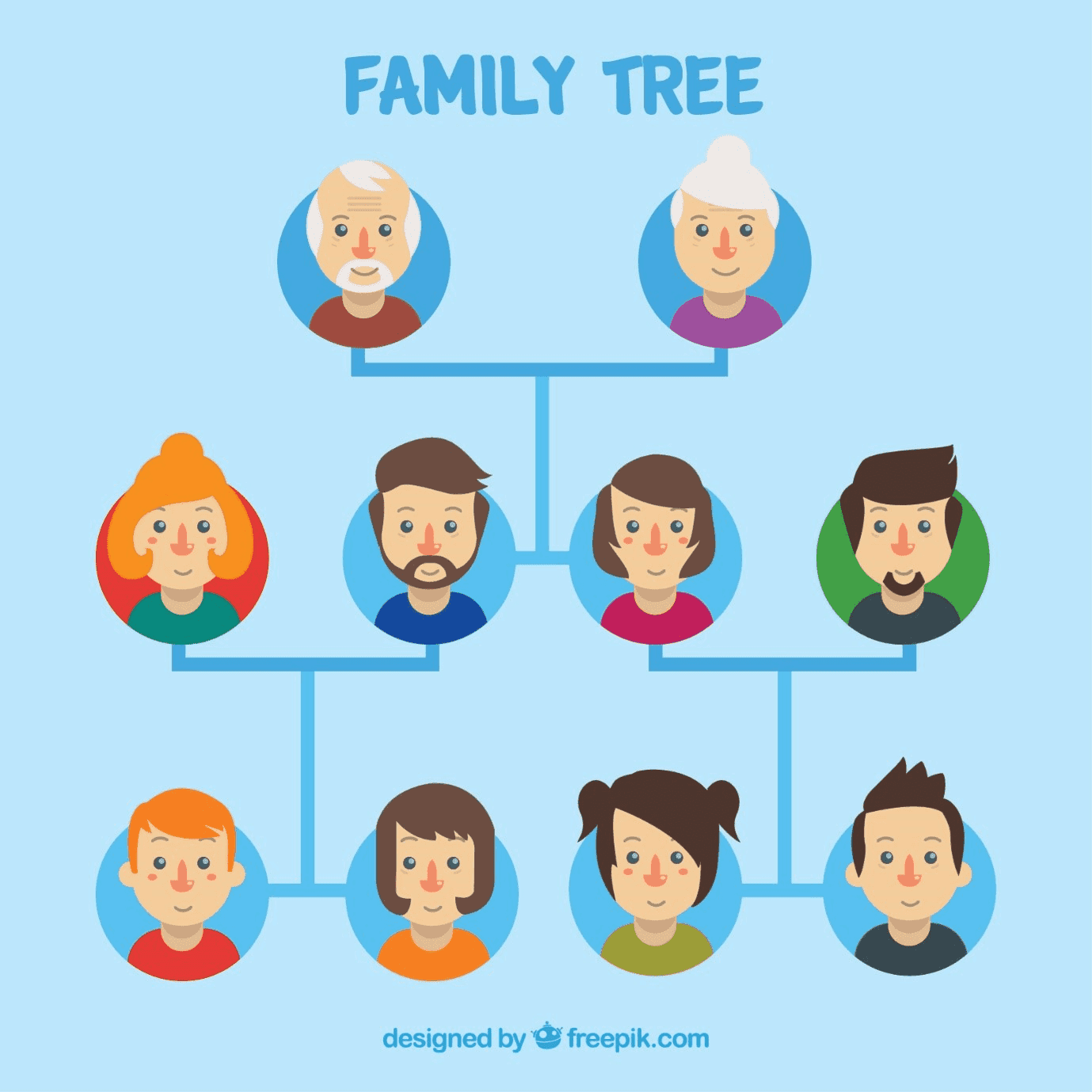
It’s easy to figure out the “촌” number by looking at a family tree. Every time you move one generation up or down, you add +1 to the “촌.”
For example, your parents are 1촌 because you only move up one step in the family tree to reach them. What about your siblings? You move up one step to your parents, then down one step to your sibling, making them 2촌.
So why is an uncle called 삼촌 (3촌) and a cousin 사촌 (4촌) in Korean? Here’s the logic: Your uncle is your parent’s sibling, so you move up two steps to your grandparents, and then down one step to your uncle, making them 3촌. A cousin is your uncle’s child, so you move one more step down, making them 4촌. Simple, right?
The Complexity of Korean Titles for Relatives
Korean titles for relatives can be very complex due to the culture’s strong emphasis on family lineage. In fact, even the terms for your relatives on your mother’s side and father’s side are different, and these titles can change after marriage. It’s so detailed that even some Koreans struggle to remember all the exact terms for distant relatives.
Let’s go over a few key family titles for closer relatives:
- 삼촌: Father’s brother
- 고모: Father’s sister
- (고종)사촌: Children of your 삼촌 or 고모, often shortened to just 사촌.
- 외삼촌: Mother’s brother
- 이모: Mother’s sister
- (이종)사촌: Children of your 외삼촌 or 이모, also shortened to 사촌.
What I’ve listed here is just the tip of the iceberg. When you go beyond 5촌, it gets even more complicated, and even I don’t know all the correct terms! To be honest, it’s hard to say whether you really need to memorize all these titles. That’s why, in my family, I simply call all my parent’s siblings and cousins as “삼촌” and all my cousins “사촌.” It feels closer and more personal that way!
➤ By understanding the concept of “촌수,” you can see how the numbers in terms like “삼촌” and “사촌” indicate the degree of closeness within the family tree. While Korean family titles are detailed and complex, this basic principle helps make sense of it all.