On October 10, 2024, a historic event took place: Korea celebrated its first Han Kang Nobel Prize in Literature. Sharing her name with Korea’s most famous river, Han Kang has become the first Korean author Nobel Prize winner and the first Asian woman to receive this prestigious award.
The unexpected nature of her win has ignited a literary craze across the country. Many are excited about the opportunity to read her works in the original Korean.
I’ve personally ordered some of her books, although it’s currently sold out in every bookstore in Korea! It seems I’ll have to wait until next Thursday to get my hands on it. In this post, I’d like to share more about Han Kang, her most impactful works, and the profound reasons for her Han Kang Nobel Prize win.
Powerful Prose Addressing Historical Trauma and Human Fragility
— The Swedish Academy
Who is Han Kang, the First Korean Author Nobel Prize Winner?
Born in Gwangju(광주) in 1970, a city with a painful history, Han Kang has spent her career exploring themes of violence, human fragility, and the beauty that persists despite suffering. These themes have been central to her works, and they reflect the questions she has long grappled with.
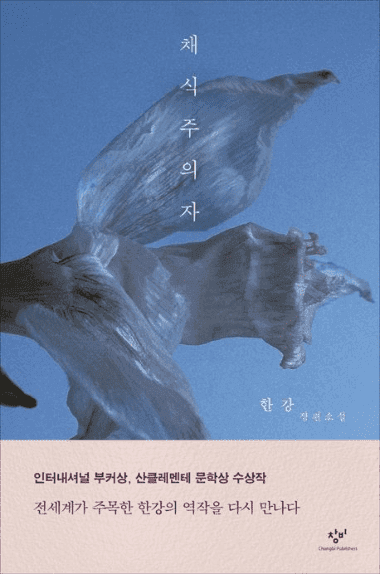
Originally debuting as a poet, Han Kang’s novels are known for their unique poetic qualities, as noted by the Swedish Academy. Her international breakthrough came in 2016 when her novel The Vegetarian(채식주의자) won the Man Booker International Prize, and her recent Nobel Prize win has further elevated Korean literature on the world stage.
Even after being awarded the Nobel Prize, Han Kang has remained humble. She expressed that, given the numerous wars currently unfolding around the world, she could not celebrate her achievement. She canceled all celebratory events and kept interviews to a minimum, a gesture that has inspired Koreans to celebrate her win in a more reflective and subdued manner.
The Vegetarian (채식주의자)
One of her most famous works, The Vegetarian, was first published in 2007. What makes this novel unique is that it’s told not from the main character’s perspective but from those around her—her husband, her sister, and her brother-in-law.
After having a disturbing dream, the protagonist, Yeong-hye, decides to stop eating meat, horrified by the violence against animals for human consumption. Her decision sparks conflict, as her family attempts to force her back into their traditional ways, leading to further violence against her. Eventually, Yeong-hye reaches a point where she wishes to become a tree, in a desperate attempt to escape her suffering and guilt.
Why She Won: “Historical Trauma and Human Fragility”
The Swedish Academy awarded the Han Kang Nobel Prize for her “powerful prose that confronts historical trauma, exposes human fragility, and explores the beauty that persists despite suffering.”
This citation is key to understanding her work. She does not write easy books. She asks difficult questions about violence, the meaning of being human, and whether redemption is possible in a brutal world. Her novels force the reader to look at things they would rather ignore, and this unflinching gaze is what makes her one of the most important writers of our time.
Human Acts (소년이 온다)
In Human Acts, Han Kang focuses on the tragic events of the Gwangju Uprising in May 1980, a democratic movement that was brutally suppressed by the military. The novel tells the story of a high school student, Mun Jae-hak(문재학), who was killed during the military crackdown at the Jeonnam Provincial Office.
Writing Human Acts was an agonizing process for Han Kang, as she often wept while working on the novel. She wanted to give a voice to those who were silenced in the massacre, and her work highlights the enduring pain of the victims’ families. With her Nobel Prize win, many of these families are celebrating the global recognition of the Gwangju Uprising, finally bringing their loved ones’ stories to the world.
A Humble Reaction to a Historic Win
Even after being awarded the Han Kang Nobel Prize, Han Kang has remained humble. She expressed that, given the numerous wars currently unfolding around the world, she could not celebrate her achievement.
She canceled all celebratory events and kept interviews to a minimum, a gesture that has inspired Koreans to celebrate her win in a more reflective and subdued manner, perfectly in keeping with the themes of her work.
Why You Should Read Han Kang
Before ordering Han Kang’s books, I hesitated. The historical and real-world violence depicted in her works can be overwhelming. However, as the Swedish Academy noted, confronting trauma is an essential part of healing and moving forward.
The Han Kang Nobel Prize win is more than just a victory for the Korean author Nobel Prize count; it’s a global acknowledgment of Korea’s painful history and the universal human questions that arise from it. I realized that personal efforts like reading these stories help humanity take another step forward.
If you’re interested, Han Kang’s books like The Vegetarian Han Kang and Human Acts Han Kang have been translated into numerous languages and are now topping bestseller lists, including Amazon. Perhaps now is a good time to join in reflecting on the questions she raises through her writing.