
Lost in Conversation? 4 Essential Korean Phrases for When You Don’t Understand

Hello! I’m Danny, a professional Korean teacher from Podo Korean, here to join you on your fun Korean learning journey. Many of you likely started studying Korean through K-dramas or K-POP. But have you ever had that experience where you understand Korean well when reading a book, but in a real conversation with a native speaker, you suddenly can’t understand a thing? This is a common challenge for learners, and it’s frustrating when all you can think is, “I don’t understand in Korean.”

I bet many of you are nodding your heads. When you’re reading a text, you can look up words and analyze grammar at your own pace, but a real conversation isn’t like that. The other person’s fast speaking speed, unexpected vocabulary, and surrounding noise can make your mind go completely blank. You often miss words you definitely know, and you worry that missing just one phrase will cause you to lose the entire flow of the conversation. When these moments pile up, it can really hurt your confidence in speaking Korean.

But don’t worry! This is a completely natural part of the process that every foreign learner of Korean goes through. Even native Koreans sometimes miss what the other person said. What’s important is how you handle these situations. Today, we’re going to learn the very Korean expressions that will save you in these tricky moments. We’ll cover everything from the simplest, most casual phrases to more advanced expressions for formal settings. Let’s boost your Korean conversation confidence to the next level with today’s lesson!

A confused young woman standing on a city street at sunset raises her hand in a questioning gesture, as if saying, “I don't understand in Korean,” with a puzzled expression on her face.

1. The Simplest, Quickest Signal: “네?” (Ne?)

The very first expression we’ll learn is “네?” (Ne?). You’ve probably seen characters in Korean dramas and movies use this phrase often when they need to ask someone to repeat themselves. It’s a very simple one-syllable expression, but it’s a powerful tool that’s incredibly useful in real-life situations. Think of it as having a similar role to “Pardon?”, “Sorry?”, or “Excuse me?” in English. In a casual relationship where you use informal language, you can simply say ‘어?’ (Eo?).

However, there is one very, very important point here: intonation. When you say “네?” (Ne?), you must raise the end of the word slightly, as if you’re adding a question mark. This is the only way to convey the meaning, “I didn’t quite catch what you just said, could you please say it again?”

What happens if you lower the intonation or say it flatly as “네.” (Ne.)? In that case, it becomes an affirmative answer, meaning ‘Yes.’ The other person will think you’ve perfectly understood them and will move on with the conversation. The meaning changes 180 degrees. For example, if a friend quickly asks, “우리 저녁 먹고 영화 보러 갈까?” (Should we get dinner and then go see a movie?), and you mishear and reply with a flat “네.” (Ne.), you might have just accidentally agreed to a movie date. Therefore, you must practice saying it with a rising intonation.

So, when is it best to use “네?” (Ne?)? It’s great for relatively comfortable and informal situations, like with friends or close acquaintances. For instance, you can use it when you can’t hear a friend well in a noisy café, or when you miss a staff member confirming your order at a restaurant. However, in very formal settings like a meeting with your company’s CEO or a job interview, it can sound a bit too casual. In those cases, it’s better to use the other expressions we’ll cover next.

2. Politely Saying “I Don’t Understand in Korean”: “다시 말씀해 주세요”

If “네?” (Ne?) was a quick and casual signal, “다시 말씀해 주세요” (Dasi malsseumhae juseyo) is the most standard and polite expression you can use in almost any situation. If you master just this one sentence, you’ll be able to solve 90% of your communication problems. Let’s break this sentence down a bit more.

  • 다시 (Dasi): An adverb meaning ‘Again.’
  • 말씀해 주세요 (Malsseumhae juseyo): A combination of ‘말씀하다’ (malsseumhada – to speak, honorific) and ‘-아/어 주세요’ (-a/eo juseyo – please do ~ for me).

The key here is the word ‘말씀’ (malsseum). ‘말씀’ (malsseum) is the honorific form of ‘말’ (mal – speech, word). A unique feature of the Korean language is that vocabulary and grammar change depending on the other person’s age and social status. ‘말씀’ (malsseum) is a prime example of a word that shows you are respecting the other person. Therefore, this expression is perfectly appropriate for speaking to someone older than you, a boss at work, a professor, or anyone you need to show formal respect to.

Of course, this expression can also be modified depending on the person and the situation.

1) For friends or very casual relationships: “다시 말해줘” (Dasi malhaejwo)
Using “다시 말씀해 주세요” (Dasi malsseumhae juseyo) with a close friend or younger sibling you speak informally with can sound a bit awkward. In this case, it’s much more natural to use the standard word ‘말’ (mal) instead of the honorific ‘말씀’ (malsseum), and the casual request form ‘-아/어 줘’ (-a/eo jwo) instead of the polite ‘-아/어 주세요’ (-a/eo juseyo). The result is “다시 말해줘” (Dasi malhaejwo).

2) A more polite and softer way: “다시 한번 말씀해 주시겠어요?” (Dasi hanbeon malsseumhae jusigesseoyo?)
While the basic expression “다시 말씀해 주세요” (Dasi malsseumhae juseyo) is plenty polite, sometimes you want to give an even more courteous and softer impression. You can add two elements to achieve this. First, add ‘한번 (hanbeon – one time)’. Saying “다시 한번” (Dasi hanbeon) adds a “one more time” nuance, making the expression a bit softer. Second, change the sentence ending to ‘-주시겠어요?’ (-jusigesseoyo?). Just as asking “Could you~?” in English sounds more polite than a direct command, in Korean, the question form ‘-주시겠어요?’ (-jusigesseoyo?) is a step up in politeness from the direct request ‘-주세요’ (-juseyo), as it respects the listener’s willingness to comply. This phrase is excellent for business meetings or official functions.

3. When Speed is the Problem: “천천히 말씀해 주세요” (Cheoncheonhi malsseumhae juseyo)

Have you ever worked up the courage to ask someone to repeat themselves, only for them to say it again just as quickly, leaving you just as lost? Keeping up with the speed of native speakers is one of the biggest challenges for Korean learners. In such cases, specifically asking them to speak ‘slowly’ is far more effective than just asking them to say it ‘again’.

The expression for this is “천천히 말씀해 주세요” (Cheoncheonhi malsseumhae juseyo). ‘천천히’ (cheoncheonhi) is an adverb that means ‘slowly.’ When you use this phrase, the other person will realize, ‘Ah, I was speaking too fast,’ and will try to match your pace. Most Koreans are very kind and willing to help foreigners trying to learn their language, so don’t be afraid to use this expression. They will likely see it as a positive sign that you are actively trying to engage in the conversation.

This phrase can also be adjusted for different levels of formality, just like the ones we learned before.

  • To a friend: “천천히 말해줘.” (Cheoncheonhi malhaejwo.)
  • Standard polite expression: “천천히 말씀해 주세요.” (Cheoncheonhi malsseumhae juseyo.)
  • Even more formal and polite expression: “조금만 더 천천히 말씀해 주시겠어요?” (Jogeumman deo cheoncheonhi malsseumhae jusigesseoyo?) (Here, adding ‘조금만 더 – jogeumman deo – a little more’ makes the request even softer.)

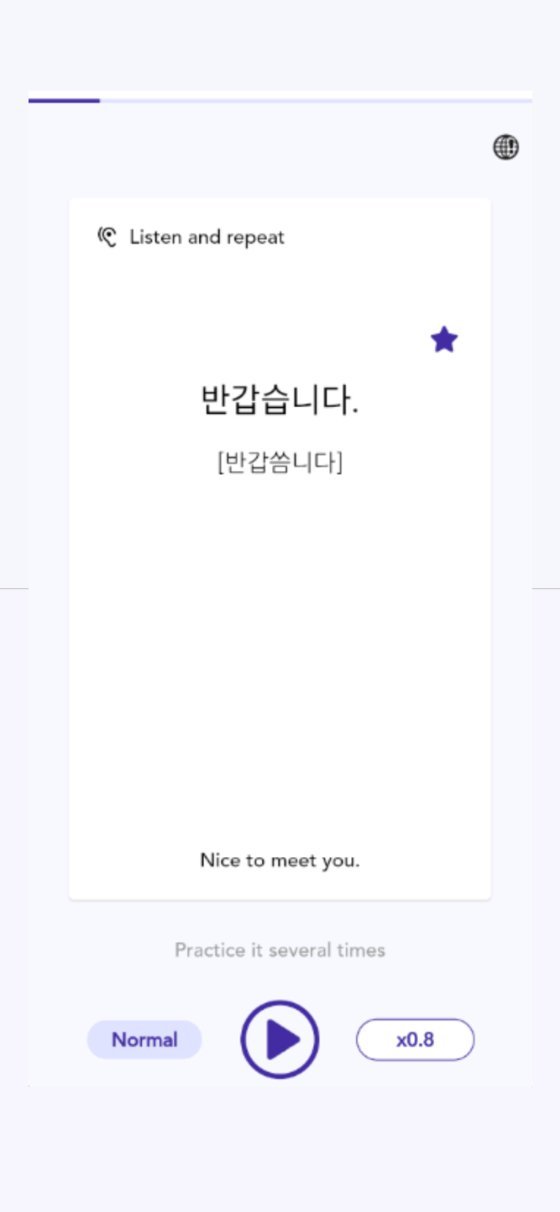
Adjusting your listening speed in a real conversation is a very difficult skill to train. If you want to work on this while studying alone, it’s important to expose yourself to audio materials at various speeds. In our Podo Korean app, every learning sentence comes with a native speaker’s audio recording, and we have a feature that lets you adjust the playback speed. You can start at a slower speed to master the sentence structure and pronunciation of each word, then switch to normal speed to train for real conversational pace. It’s the most effective way to train your ears before you meet native Koreans.

4. A Smarter Way Than “몰라요” (Mollayo): “잘 모르겠어요” (Jal moreugesseoyo)

The last expression we’ll learn is a crucial one for when you haven’t just misheard something, but you don’t understand the content itself. During my classes, when I ask students, “이해했어요?” (Ihaehaesseoyo? – Did you understand?), many of them reply with “몰라요” (Mollayo). Grammatically, this isn’t wrong. ‘몰라요’ (Mollayo) is the present tense form of ‘모르다 (moreuda – to not know)’, so it accurately conveys the meaning ‘I don’t know.’

However, in real Korean conversations, simply replying with “몰라요” (Mollayo) can sound a bit direct, cold, and even uninterested depending on the situation. It can give off a nuance similar to bluntly saying, “I dunno.” That’s why Koreans themselves are much more likely to use the expression “잘 모르겠어요” (Jal moreugesseoyo). What’s the difference between these two phrases?

If we analyze “잘 모르겠어요” (Jal moreugesseoyo), we can uncover the secret to its softness.

1. The role of the adverb ‘잘’ (jal)
‘잘’ (jal) means ‘well.’ Adding ‘잘’ (jal) before “모르겠어요” (moreugesseoyo) creates the meaning “I don’t know well.” This avoids a definitive statement like ‘I 100% do not know’ and instead offers a more humble and gentle nuance, like ‘I think I might know, but I’m not sure,’ or ‘I tried to understand, but I’m not quite there yet.’

2. The role of the grammar ‘-겠-’ (-get-)
The core of this expression is ‘-겠-’ (-get-). While ‘-겠-’ (-get-) is used for the future tense, it’s also a crucial grammatical element used to express conjecture, possibility, or a softened attitude. “몰라요” (Mollayo) is a direct statement about a current state, whereas “모르겠어요” (moreugesseoyo) contains the nuance of conjecture and politeness—‘it seems I don’t know.’ It has the effect of softening the statement by one step, rather than directly revealing your lack of knowledge.

Therefore, when someone has explained something but you still don’t get it, saying “죄송하지만, 잘 모르겠어요.” (Joesonghajiman, jal moreugesseoyo – I’m sorry, but I don’t quite understand.) instead of just “몰라요” (mollayo), perhaps followed by “다시 한번 설명해 주시겠어요?” (Dasi hanbeon seolmyeonghae jusigesseoyo? – Could you please explain one more time?), will give the impression of a polite and eager learner. This is a much better way of saying I don’t understand in Korean.

Conclusion: Mistakes Are a Shortcut to Growth!

Today, we learned four essential expressions to use when you don’t quite understand what a Korean person is saying in a conversation. Let’s recap briefly:

  • 네? (Ne?): For quickly asking again with friends or in casual settings (mind the intonation!).
  • 다시 말씀해 주세요 (Dasi malsseumhae juseyo): The standard, polite expression for any situation.
  • 천천히 말씀해 주세요 (Cheoncheonhi malsseumhae juseyo): When the speaker’s pace is too fast to follow.
  • 잘 모르겠어요 (Jal moreugesseoyo): A much softer and more humble expression than ‘몰라요’ (mollayo) for when you don’t understand the content.

Conversing in a new language is always a challenge. Let go of the pressure to understand every single word perfectly. The most important thing is having the courage to admit when you don’t know and to ask for clarification. The phrases we learned today are not just techniques for escaping a crisis; they are expressions of your active effort to communicate more deeply and accurately with others.

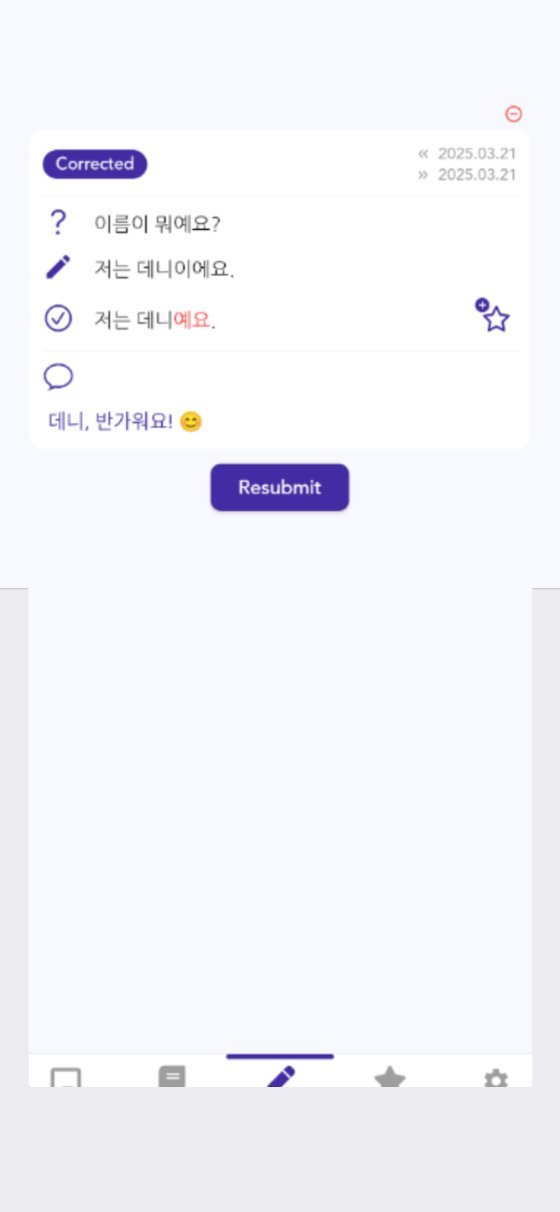
There’s a big difference between knowing these expressions in your head and being able to say them out loud. Want to practice the sentences we learned today as if you were in a real situation? Download the Podo Korean app and build your confidence through various lessons structured like real conversations. Our voice recognition feature will help correct your pronunciation, and through repeated practice, we’ll help you get to the point where these expressions come out naturally in any situation. Podo Korean will always be here to cheer you on in your Korean learning journey!

Spread the love ❤️

댓글 달기

이메일 주소는 공개되지 않습니다. 필수 필드는 *로 표시됩니다

위로 스크롤